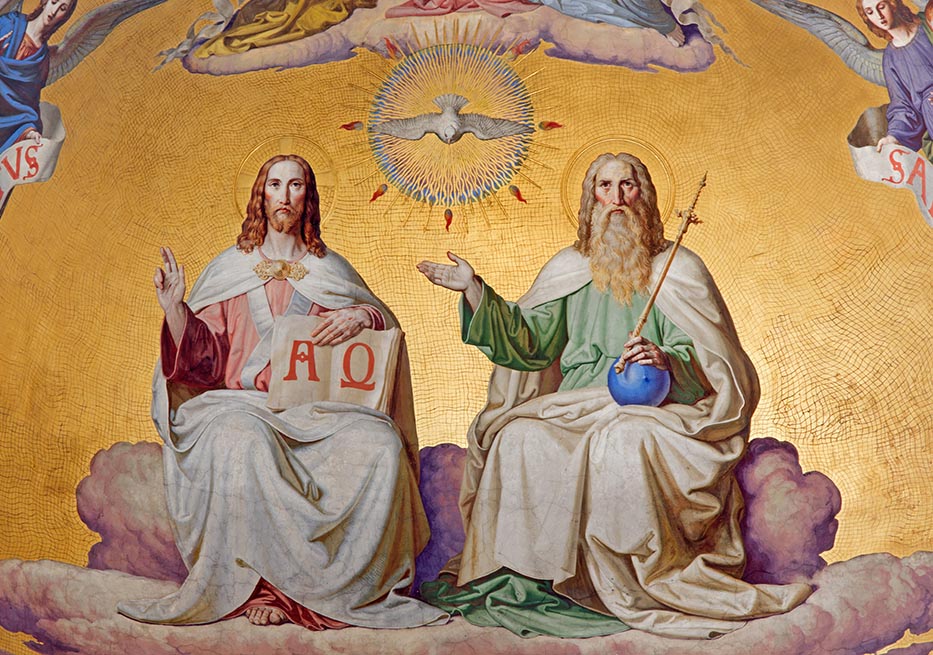
SOLEMNITY OF THE MOST HOLY TRINITY – YEAR "A"
(John 3:16-18)
"For God so loved the world that he gave his only Son, so that everyone who believes in him might not perish but might have eternal life. For God did not send his Son into the world to condemn the world, but that the world might be saved through him. Whoever believes in him will not be condemned; but whoever does not believe has already been condemned, because he has not believed in the name of the only Son of God."
Encountering Christ: The Truth About God
The first verse of today’s Gospel is perhaps one of the most famous verses in the entire Bible:
"For God so loved the world that he gave his only Son, so that everyone who believes in him might not perish but might have eternal life."
In many ways, this verse is a summary of the entire Christian message. Within this single verse, we find the truth about God, about the world, and about ourselves.
The truth about God concerns His innermost identity, which is love. As Scripture says: "God is love" (1 John 4:8). It is this love that moved God to send Jesus into the world.
But if God is love, then He must also be personal and relational. Love always involves generously receiving another and giving oneself to that other.
This is where we begin to see the greatest mystery of the universe, which the Church celebrates in a special way today: that God is the Holy Trinity. From all eternity, God is one Divine nature but in three Divine Persons; one true God, yet a Trinity in His Divinity.
We cannot fully comprehend this mystery. How can God be one in three persons at the same time? We cannot fully grasp it, but we can meditate upon it.
We can also rejoice in knowing that God is neither an abstract, impersonal force—as some spiritual philosophies claim—nor is eternity filled with many conflicting gods, as some pagan religions teach. God is not merely all-knowing and all-powerful; He is not just a harsh and demanding ruler. God is also perfectly good.
God is Love!
What concept of God dominates my mind, my perspective, and the way I face life's challenges when I pray?
The Truth About the World
The truth about the world around us is also revealed in this verse. It tells us that this life has two possible outcomes: we can either perish or enter into eternal life.
This world is an arena where each of us, by exercising the gift of spiritual freedom, shapes our eternal destiny. This world is a battleground, and each of our hearts is a battlefield.
God comes to our aid through Christ. If we believe in Christ—that is, if we accept His friendship and follow where He leads us—everything that is good, true, and beautiful will triumph within us. We will grow ever more in wisdom, peace, and joy in this life and for eternity in heaven.
But if we stubbornly reject God’s invitation—His voice within our conscience, His call within our hearts, and His signs in our lives—we may enjoy the fleeting pleasures of this world for a season. Ultimately, however, God will respect our decision to separate ourselves from His friendship.
And when our life comes to an end, we will experience the eternal pain that comes from that separation. That is when we will be lost. This world is not our final home. It is a place of pilgrimage, struggle, and—hopefully—growth into spiritual maturity.
The Truth About Ourselves
This verse also reveals the truth about ourselves. We are loved. We are worthy of love. We are known. We are sought after. We are chosen. We are wanted. Our lives have value.
Yet, many experiences we encounter in this fallen world often seem to contradict that truth. From childhood to adulthood, people often treat us beneath the dignity we possess as beings created in the image and likeness of God.
Consequently, we find ourselves demeaned, hurt, abandoned, ignored, used as objects, and forgotten. This pain causes us to begin believing lies about ourselves:
that we are unworthy of love,
that we do not need to be loved,
that our desire for fulfillment and genuine relationships can never be realized.
Jesus came to shatter the darkness of those lies, to break the spiritual and emotional chains that stem from them, and to heal the wounds within us. This is the meaning of John's words:
"For God did not send his Son into the world to condemn the world, but that the world might be saved through him." (John 3:17)
To save the world, to mend what is broken, and to redeem what is lost—that is why Jesus came. And that is why Jesus continues to come every day through the Holy Spirit, through the Holy Sacrifice of the Mass, through His presence in the Holy Eucharist, and through the guidance of the Father in His divine wisdom.
The Holy Trinity continues to weave the work of salvation, which includes the complete restoration of our broken and divided humanity.
That is why we can say with today’s Canticle:
"Blest are you, O Lord, the God of our fathers, praiseworthy and exalted above all forever." (Daniel 3:52)
Prayer and Resolution
O God, I thank You for revealing to me the truth about Yourself, about the world, and about me. I believe all that You have revealed to me. I believe with all my heart in Jesus, Your Son, whom You sent into the world to be our Savior and Redeemer.
I want to believe in Him more and more each day, so that the eternal life You have promised to all who accept Your friendship may overflow in my heart and in the hearts of those around me.
I am often distracted by the many anxieties of life and lose sight of the reality of things. Teach me to live more firmly in the light of Your truth. Teach me to discover and rejoice in the evidence of Your love hidden beneath the appearance of all things.
Lord, today by Your grace, I will strive to pray with all my heart whenever I make the Sign of the Cross—whether during Mass, before meals, in my personal prayers, or before going to sleep. I will make this sign a true act of worship and praise to God, a renewal of my promise to follow Christ at all costs, and a plea for divine assistance in the struggles I face as Your beloved child and disciple. Amen.